The world is changing rapidly, especially with the escalation of the crisis in the Middle East and the deterioration of the climate and environment. Though the first instinct of anyone is to think that all this has led to a decline in the tourism sector, to everyone's surprise, the travel and tourism sector has been booming. According to UN Tourism's latest report, around 307 million tourists engaged in international travel in the first quarter of 2026, approximately 6 million more than in the same period of 2025. Moreover, according to the US Travel Association, the tourism sector is expected to continue growing in the coming years and could reach $1.53 trillion by 2030. This is not random growth, but what exactly is driving this relentless urge to explore? By understanding the core factors driving and constraining global demand, travelers and industry insiders can better predict emerging hotspots and plan for the future of global exploration.
The Real-Time Statistics of Tourism in Different Parts of the World
Though most areas around the world experience growth in the tourism sector, a few destinations even face a decline. The latest World Tourism Barometer by UN Tourism paints a clear picture of this uneven expansion, detailing regional trajectories for Q1 2026:
- Europe: It is the world's most sought-after travel destination, with over 130 million international tourists in Q1 2026.
- Africa: All arrivals in Africa continued to grow in Q1 2026, with an average increase of 4%.
- Asia and the Pacific: The combined average increase in tourism is 3%, with February showing up to a 9% surge and March only a 2% increase.
- The Americas: While Central America experienced a massive 18% surge, North America saw a modest 2% growth, contrasted by a 1% decline in South America.
- The Middle East: Though most Middle Eastern countries show a decline in tourism amid the geopolitical conflict, a few, like Egypt, still see an increase of around 16%.
The Push Factor: What is Driving Travelers Out of Their Homes?
Travelers are willing to drive themselves out of the house to explore destinations around the world and unearth the hidden gems from far-off places. But what circumstances lead travelers to visit unfamiliar places, even in the face of geopolitical tensions? Let's navigate the reasons:
1. Increasing Disposable Income
The number of middle-class travelers is growing and emerging as upper-middle class due to rising incomes, especially in Asia, South America, and Africa, rather than in developed countries. At present, people are more likely to live in luxury rather than save large sums; thus, they prefer to travel more as their disposable income increases.
2. Getting a Highly Personalized Itinerary With AI Predictions
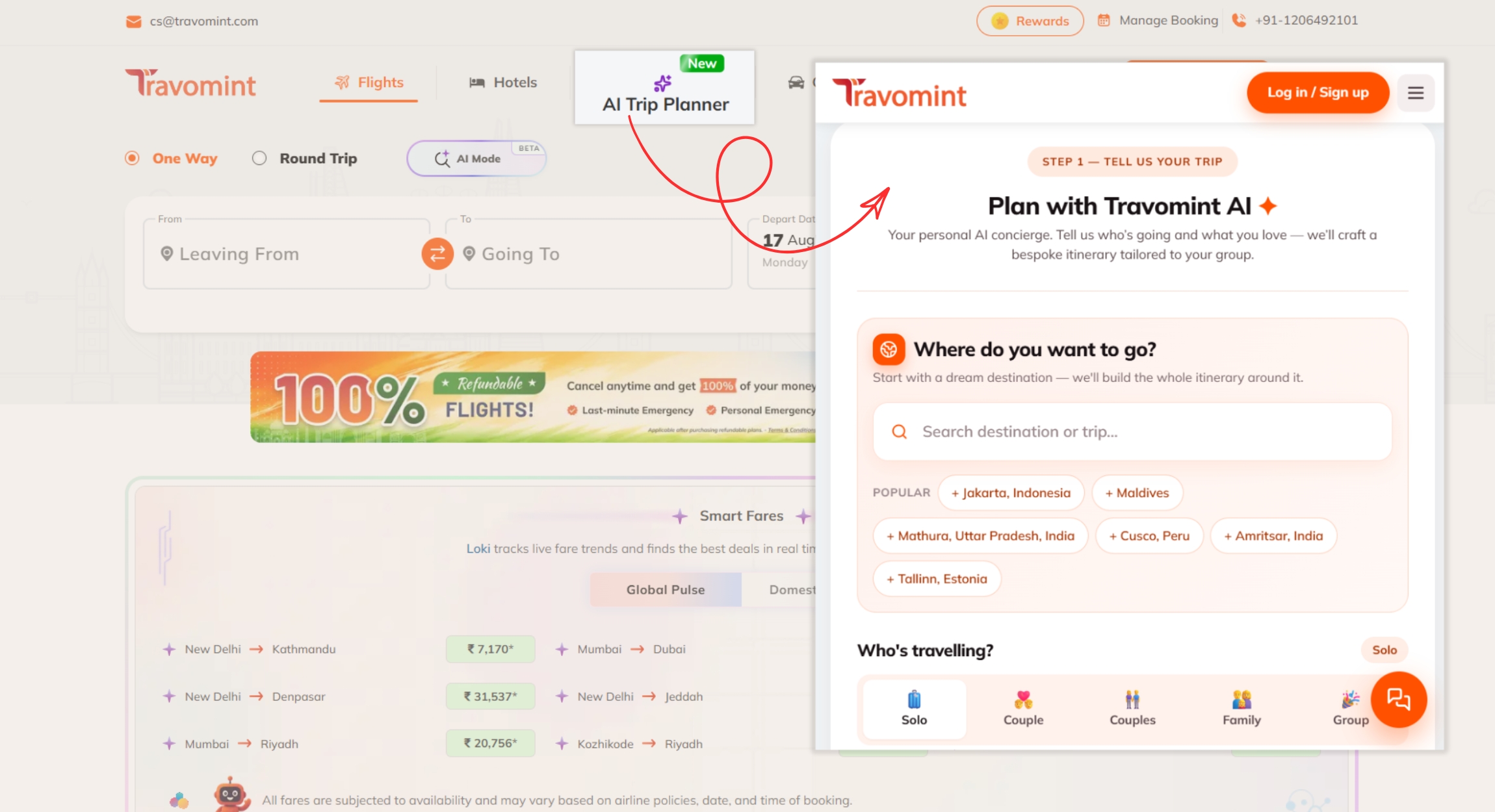
AI is becoming increasingly involved in the travel process, whether it is related to planning an itinerary or predicting flight fares, thereby simplifying the overall experience. Thus, if a traveler wants to create an itinerary based on specific details, AI will help them create a travel plan tailored to their conditions and requirements. Moreover, AI prediction tools are available that help travelers find the best time to book their flights for pocket-friendly fares.
3. Concept of Revenge Travel After the Pandemic Became a Lifestyle
The COVID-19 pandemic has disrupted the lives of millions of people and made them stay at home for years. With the end of the pandemic, people began traveling to different destinations in a surge to make up for all the lost years. This 'revenge travel' has integrated into a lifestyle that travelers are unwilling to let go of, leading them to visit different destinations now and then.
4. Inclusion of Wellness Tourism as a Part of Life
Nowadays, tourism is not just limited to exploring culture and tradition; it has become more. Currently, travelers seek serene, tranquil places that help them find relief from their hectic lives and thus serve as wellness retreat centers.
The Pull Factors: How Destinations Are Attracting Global Demand?
It is not just travelers; the destination itself encourages tourism. To this end, the government and airlines have taken several significant steps that have successfully increased tourism. If you desire to learn about push factors that attract travelers, you can refer to the section provided below:
1. Enhanced Connectivity Affordably
With increased tourism demand, airlines enhance their services and deploy more aircraft on various routes, improving connectivity for travelers. Moreover, by using several cheap flight tips and flying with budget airlines, travel costs can be kept to a minimum, allowing luxury travelers to explore different parts of the world without breaking the bank.
2. Ease in Visa Facilitation and Process
Several countries around the world have announced major visa relaxations to boost tourism. In this sequence, the European Union has launched a fully digital online visa application process for eligible travelers and rolled out the ETIAS system for visa-free travel, thereby simplifying border checks. Likewise, Thailand expanded its visa-free entry to 93 countries, and Sri Lanka launched new digital nomad visas for passengers. Various other countries also made similar moves to enhance tourism in their country.
3. Pop-Culture Tourism Leads to a Global Event
While various factors played a crucial role in increasing tourism, global events and cultural trends are among them. With the spread of pop culture, such as K-pop, Bollywood, Hollywood, and more, the image of destinations is enhanced, making people eager to visit those places. Similarly, Seoul has seen a surge in visitor numbers with the rise of K-dramas.
4. The Currency Advantage with Flexible Exchange Rates
Countries with stronger currencies are generally at an advantage when travelers are willing to explore countries with weaker currencies. It allows a traveler to complete their journey affordably, even when flight or accommodation prices are high during times of crisis. Moreover, a flexible exchange rate helps make travel more budget-friendly when a domestic currency depreciates.
Navigating the Headwinds: Geopolitics and Climate Realities
How geopolitical and climate realities can enhance inbound and outbound travel in one region but lead to a decline in another is an interesting way to understand tourism and how different travelers respond to it. Let's figure out why and how the current global circumstances are affecting the willingness of a traveler and in which direction:
1. The Rise of Climate-Driven Travel
As extreme summer heatwaves and wildfires plague traditional Mediterranean hubs, travel patterns are shifting. Travelers are trading scorching beaches for cooler climates and a trend now known as 'coolcationing':
- Shift in visitors to cool-cationing destinations: Southern Europe and North African destinations experience a severe decline in visitor numbers during the peak summer season. Travelers prefer to travel to colder regions, such as Norway, Sweden, and Iceland, to avoid exhausting and dangerous heatwaves.
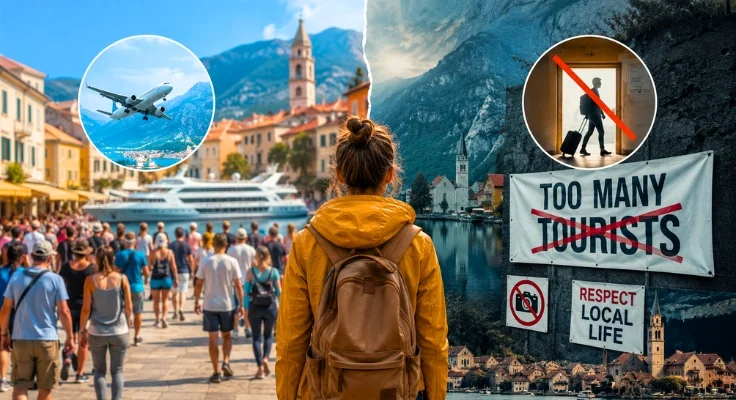
- Looking for an offbeat path destination: At a famous, renowned destination for exploration, the crowd is already taking over, diminishing the experience for those who want to enjoy their trip in a serene place. Thus, travelers change course and start looking for places that are a bit offbeat yet offer the same feel and vibe as touristy places.
2. Effect of Traveling Due to Geopolitical Substitution
Though the geopolitical impact has caused instability, a decline in tourism can be seen in affected countries. However, this also causes benefits for neighboring, stable countries with an inevitable "spillover effect" that led to:
- Redirection of tourism flows: Since tensions have increased in the Middle East and Eastern Europe, travelers have canceled their long-haul trips and redirected their travel to neighboring countries with politically neutral destinations within their budget.
- A surge to stay in safe havens: Countries with high safety indices, including Japan, certain Central Asian regions, and Costa Rica, have seen a spike in both inbound and outbound tourism. The urge to stay in a safe and healthy environment is among the top reasons to travel amid the geopolitical crisis.
Impact of Rising International Tourism Amidst the Middle East Crisis
General Shaikha Al Nuwais, UN Tourism Secretary, commented that "the ongoing conflict in the Middle East is disrupting travel patterns well beyond the region itself... At a time of growing geopolitical and economic pressure, this reinforces tourism’s wider role in supporting economies, creating opportunity and sustaining communities far beyond the sector itself." A few of the crucial impacts of rising international tourism amidst the Middle East crisis can be seen as follows:
- With the escalation of the conflict in the Middle East, various airspaces have been closed, leading airlines to either suspend or reroute their flights.
- The crisis led to a hike in fuel prices. Over half of Europe's jet fuel demand has been met by the Middle East, leading to higher flight prices.
- Travelers are looking for alternatives to the Middle East and trying to avoid travel to the conflict zone, increasing demand for hidden gems around the world.
- With the increase in tourism in developing countries, their economies are growing slightly faster than before, leading to overall growth.
Future Trends in International Tourism
The dimensions of travel have changed significantly in recent years and are about to change in different ways in the near future. When we look at future trends in international tourism, a few things are notable from today's perspective. First of all, with greater awareness of environmental impact, travelers are seeking sustainable, eco-friendly options. Moreover, mere sightseeing is not the only thing a traveler considers; getting authentic, immersive activities has also become a concern when seeking a retreat destination. AI has been widely used by travelers to plan their end-to-end personalized itineraries and find budget-friendly travel options.