You spot a great price for your desired flight in the morning, but by evening, boom, prices increase exponentially. This is not unique to you; thousands of travelers experience this every day. Though you may understand that AI affects flight prices, comprehending how it works is the key to beating the system. Recently, more and more airlines are using AI to determine airfares and increase profits. This helps airlines speed up their analysis of various flight cost factors, including demand forecasts, competitors' prices, and historical data. It influences current bookings, helping them decide whether to increase flight prices. Here is the breakdown of how airline algorithms really work and how to ensure you book a cheap flight ticket even in this fast-paced AI world.
What is AI-Driven Airfare Pricing?
AI-determined airfare cost, also known as AI-driven dynamic pricing, refers to the cost of a flight determined by its real-time demand. Here, airlines continuously use artificial intelligence to adjust their flight ticket prices. Rather than using a fixed fare bucket for all passengers at all times, airlines use AI to analyze real-time market data and consumer demand and to calculate the maximum fare a passenger is willing to pay.
How does AI Determine Airfare Cost?
AI models in airlines are not stuck with old-style set rates; they adjust prices dramatically based on various factors, including real-time demand and massive datasets. To set and adjust the price for a single flight, an AI model processes several core variables, including:
- Historical supply and demand: Check historical supply and demand data by looking at the curves, seat capacity, and how quickly seats are occupied by the airline. As seat availability decreases, prices automatically rise.
- Competitor benchmarking: Monitor competitors' prices on the same route and adjust flight prices in real time to maintain a balanced market share.
- External market variables: Set prices based on external factors such as fuel prices, weather forecasts, seasonal holidays, and upcoming local events.
- Digital footprint & demographies: Analyze a traveler's digital footprint and estimated disposable income by reviewing device types, such as whether the laptop used for booking is premium.
- Search urgency: Track whether the traveler repeatedly searches for the same destination, which signals the traveler's urgency for that destination.
- Predicting passenger demand: Moreover, by analyzing real-time demand for a specific destination and forecasting future demand, AI raises flight costs if the analysis indicates demand will increase, and vice versa.
Why Do Airlines Use Dynamic Pricing?
Airlines use AI to set real-time prices based on flight demand and various other factors. But the question is, why is it necessary to set the dynamic price? There are various reasons for it; a few of the significant ones can be seen as follows:
- Flight seats are like perishable inventory for airlines; i.e., there is no use for seats left vacant on a flight after take-off. Thus, the goal of dynamic pricing is to book the maximum number of seats at the highest prices passengers are willing to pay.
- To balance its customer segments, dynamic pricing is used. As leisure travelers, who are prone to being affected by the higher price, generally make their bookings in advance, on the other hand, business travelers, who typically aren't affected by the higher price, are likely to book at the last minute and thus don't mind paying a few extra dollars for their ticket.
- Fares are frequently adjusted to ensure that airlines absorb fluctuating external costs, including jet fuel, real-time pricing strategies adopted by competitors, and seasonal spikes in demand.
Which Airlines Use AI for Dynamic Pricing?
AI is becoming increasingly common in the aviation industry for setting dynamic flight prices. Whether a highly reputable airline or an emerging one, everyone wants to increase their sales and thus tries to set their flight prices according to the traveler's psychology. A few of the major airlines that use AI for dynamic prices for their flights include:
- Delta Air Lines
- American Airlines
- Lufthansa Group
- Virgin Atlantic
- WestJet
- Royal Air Maroc
- Singapore Airlines
- Air India
- Thai Airways
- Malaysia Airlines
- IndiGo
- AirBaltic
- Viva Aerobus
- Qatar Airways
- Emirates
- United Airlines
Benefits of AI Dynamic Pricing
AI-driven airfare pricing benefits not only airlines but also travelers. Let's figure out together how real-time price change is advantageous for both the airline and the travelers from the provided section:
AI Dynamic Pricing Benefits for Airlines
- The algorithms used by airlines for dynamic pricing help them estimate the exact price elasticity of demand and thus maximize the value they can earn at a given time.
- AI automatically adjusts flight prices based on competitors' behavior and seasonal demand, eliminating the need to create cluttered manual spreadsheet updates.
- As prices are set based on flight demand, the airline lowers fares when demand is low to attract travelers, thus filling more seats and preventing perishable inventory.
- By allowing AI to set flight prices in autopilot mode, the airline saves hours of human labor, significantly reduces human error, and frees its resources to focus on high-level strategy.
AI Dynamic Pricing Benefits for Passengers
- During the low season, the algorithms automatically reduce flight prices, making it the perfect time to book for budget-friendly travelers.
- Various platforms use AI to analyze flight pricing patterns and provide you with insights into whether to book your flight now or later, based on predicted prices.
- Rather than fixing the price of a flight, AI continuously adjusts it, making it possible for travelers to get a reasonable flight ticket at the last minute.
- By comparing competitors' flight prices, AI generally reduces fares across flights, allowing its passengers to fly at affordable rates rather than randomly hiking the prices of their flights all the time.
Limitations and Challenges of AI Dynamic Pricing
In terms of pricing, both airlines and travelers benefit from AI in the aviation sector. However, the aviation sector faces some limitations and challenges when using AI for dynamic pricing. Some major hurdles faced by airlines in using AI in setting airfare prices can be seen as follows:
- Frequent changes in flight prices create mistrust among passengers, who feel cheated by the minute-by-minute price fluctuations.
- Airlines find it difficult to explain why prices are set by advanced machine learning, making it harder for them to defend their price increases against legal scrutiny or audits.
- AI in the aviation industry is highly dependent on the historical data. If the data itself is biased or discriminatory, it would be difficult for the AI to accurately predict the flight's price.
- Using AI to determine flight prices requires sophisticated infrastructure and substantial financial investment, making it difficult for small companies to implement.
How to Ensure a Cheap Flight Ticket with Dynamic Pricing of AI?
So far, you have figured out how AI uses a historical record of various travelers and the airline's performance under different circumstances to determine the price of the current flight. If you want to learn how to find a cheap flight in this dynamic fares world, you can refer to the following section, where some of the most efficient tips are offered to make your flight affordable:
Leverage predictive AI tools:
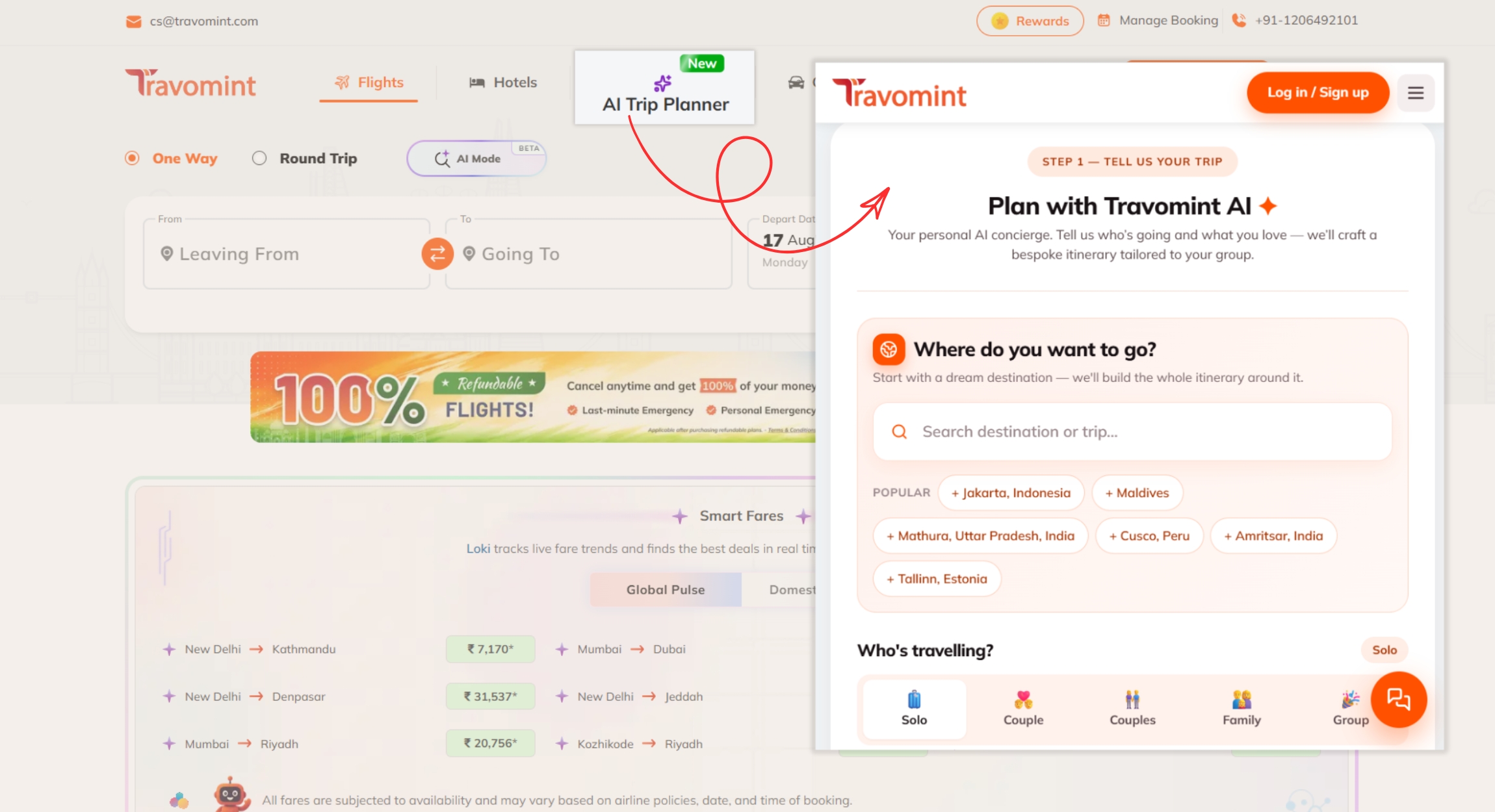
Price prediction tools are not only beneficial for airlines; as a passenger, you can also leverage the tool. You can access the price prediction tool from various flight comparison sites, including Google Flights, Hopper, Skyscanner, and more. Afterward, you can learn about whether the price of your desired flight is likely to increase or decrease in the near future. Hence, you can act accordingly and buy your flight ticket when it is at its lowest.
Use a Different VPN:
The price you pay for your flight also varies depending on the country you are booking with. If the country you are booking from is a lower-income region, AI offers lower flight fares, and vice versa. Thus, when booking your flight, you can use a VPN to connect to an IP address from a country with a weaker economy, so the dynamic flight price won't hurt you when you book.
Choose the less busy airport:
Based on the demand for the route and the airport, AI decides the price of a specific flight. Thus, if a flight is not in demand, irrespective of the reason, the estimated fares are low. Even if demand at a specific airport is low, the AI keeps prices low to attract more passengers. Thus, if you find a less busy or unpopular airport near your desired destination, you can book a flight at a lower price. However, you are required to consider that the cost for the local airport to your desired destination is not more than the difference that you have to pay for your flight to a popular airport.
Travel during the off-peak time:
With the reduced demand for the flight, the price offered by AI is also lowered. Thus, the most budget-friendly time of the day is during early morning or late night, and the most economical day of the week to fly is Tuesday or Wednesday, when demand for business travel dips. Moreover, the off-peak season for your destination is the best time of year to travel on a budget, when travelers are reluctant to visit.
What the Future Holds?
AI is constantly evolving the aviation industry, shifting rigid flight fares to personalized, real-time pricing. By analyzing historical records, demand shifts, booking habits, competitors' prices, and the price a traveler is willing to pay at a specific time, AI adjusts flight prices in real time. So far, airlines such as Delta Air Lines have seen a significant boost in revenue. The future of AI for airlines is expanding even more. Highly personalized pricing and fair pricing in response to rapid market dynamics are upcoming. For some, this pricing system, based on consumer personalization, is invasive and discriminatory. Though the government is planning to ensure transparency in flight pricing and protect consumers' data, how effective it will be is worth seeing.