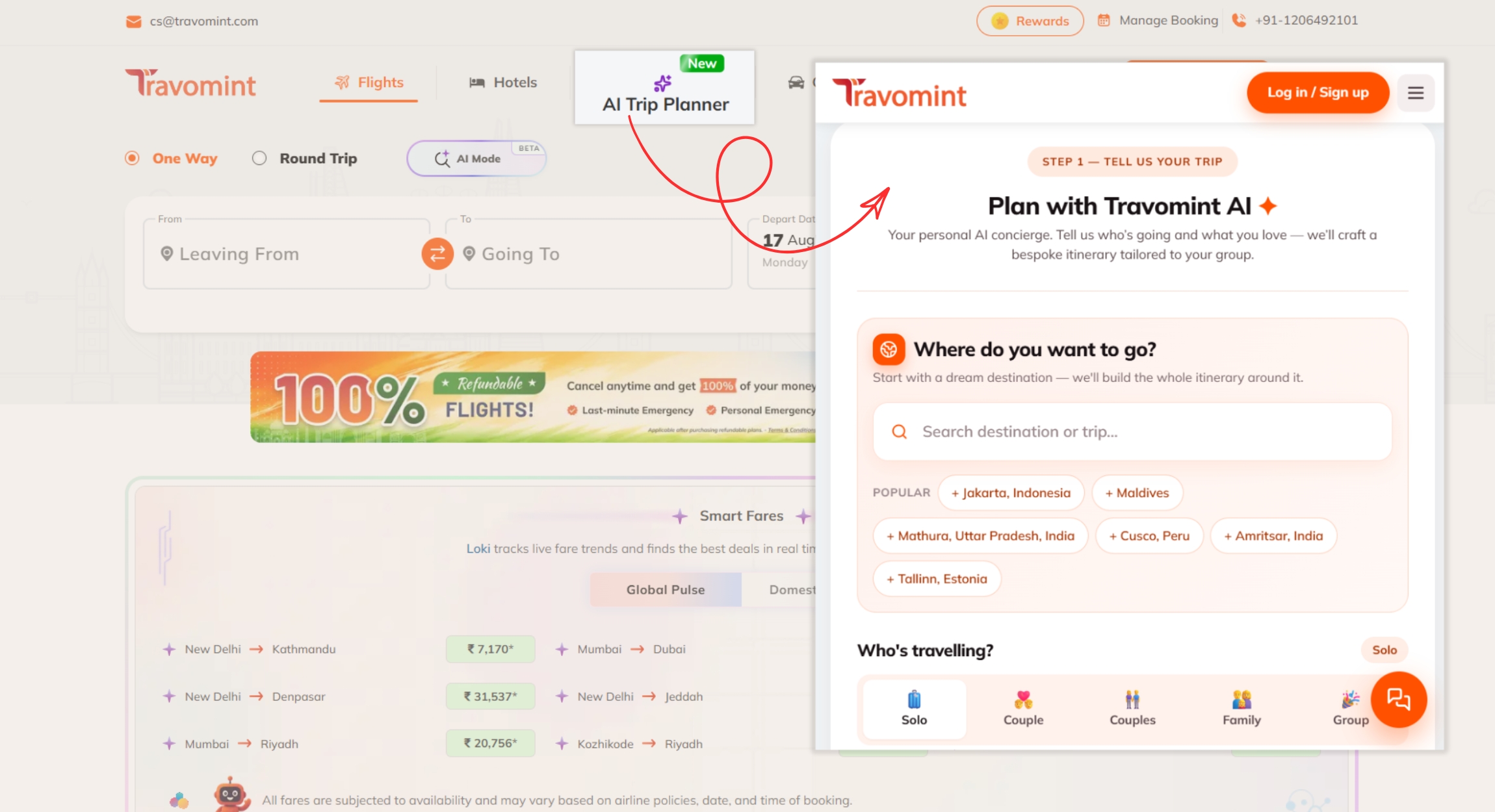
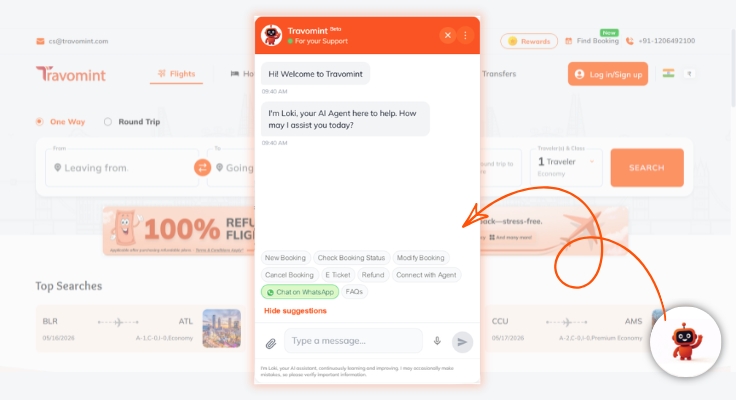
Feeling stuck with the services and deals offered by a company? Turning to customer service is one of the best ways to resolve any confusion and move forward. For decades, human support has been provided to customers who endure long wait times for a quick resolution to their issues. Today, AI is replacing live customer service, and you are immediately greeted with AI-powered chatbots. Whether this shift is a necessary revolution or merely a symbol of the emergence of AI power across every sector is the ultimate modern debate. However, we can compare the two methods to understand their advantages and limitations and get the bigger picture.
What are AI-Powered Chatbots?
AI-powered chatbots are software applications that use artificial intelligence, machine learning, and natural language processing (NLP) to simulate conversations with their users. They analyze messages and retrieve data to provide a human-like response to their users. Unlike rigid, rule-based bots that work on pre-written scripts, AI-powered chatbots comprehend context, learn from interactions, and generate responses in real time. AI-powered chatbots are not limited to solving user queries; they also have many other use cases, including tracking bookings or orders, changing passwords, updating bookings, and more, which help put users at ease before or after purchase.
How Do They Work?
AI-powered chatbots work on a few basic principles that will help them grow and learn new things every time, including:
- Natural Language Processing (NLP): Allows the chatbot to decode, interpret, and comprehend users' intent even though the query is framed uniquely.
- Machine Learning (ML): A large dataset is used to train the chatbot, enabling it to improve over time and deliver more accurate, higher-quality responses.
- Large Language Models (LLMs): Integrate advanced conversational AI to generate responses that are more human-like, creative, and context-aware, rather than relying on fixed responses to queries.
Benefits of AI-Powered Chatbots
- Accessible throughout the day: Users can ask their questions at any time, at their convenience. AI-powered chatbots are accessible 24/7, allowing users to raise their issues and get replies instantly, regardless of when they submit their queries.
- No waiting times: With information stored and the chatbot's machine learning capabilities, responses to queries are provided immediately, with no wait time.
- Can handle large queries simultaneously: Whether a single user is putting a query or hundreds or thousands of users are there to solve their confusion, the chatbot can handle all the queries simultaneously, without lagging in the system.
- Provide consistent responses: The quality and consistency of the chatbot's responses remain the same whether a user asks the same question once or multiple times in a row. Thus, it reduces the chances of providing wrong or irritated responses for any query.
- Cost-saving for companies: Instead of requiring hundreds of human employees for customer support, a single AI-powered chatbot slashes overhead costs by eliminating the need for several live support representatives to resolve hundreds of thousands of queries in no time. Apart from reducing the number of employees, the chatbot also helps capture users' attention and resolve their issues at the earliest.
Limitations of AI-Powered Chatbots
- Requires data updates from time to time: The chatbots need to be fed reliable data whenever the company's policies or processes change. If they have no data or outdated data, they are likely to respond to users with incorrect information, leaving users unable to use the chatbot.
- Doesn't try to comprehend the queries: The AI-powered chatbot only understands the query as written and doesn't ask follow-up questions for better comprehension. And even if they do, they are unable to read between the lines. Thus, based on a limited understanding of the question, the chatbot provides a solution that may not be applicable to the user.
- Lacks an empathetic viewpoint: AI doesn't have any feelings, so neither do these AI-powered chatbots. A simple task assigned to the chatbot is to provide the best possible solution for their issues rather than delving deep and empathizing with the user. However, there are various circumstances in which, along with the solution, users also want an emotional touch that is lacking here.
- Gaps in further processing systems: In cases where the chatbot is unable to provide the required solution to a query, a well-structured, prescribed process for contacting live support is missing across various chatbots. It leaves users stranded, as neither are they provided with solutions to their queries nor do they know where to proceed to resolve them further.
What is Live Human Support?
Live human support refers to real-time assistance provided to users by people rather than automated chat systems. Support teams help users to resolve their complex queries that require emotional intelligence and personal guidance. Companies offer various communication modes to connect with people, including chat, phone calls, and emails. With a human touch, users feel emotionally satisfied, and a responsive tone that adapts to their needs instills trust and confidence. This is one of the greatest ways to resolve issues when a query involves complicated or challenging situations that require an individual's judgment and attention.
How Do They Work?
Human customer support hinges on some basic principles that allow humans to work efficiently, using emotional and cognitive reasoning, including:
- Active listening: Live persons are actively present to listen to the customer's tone, read between the lines, and comprehend the frustration and anxiety behind every complaint.
- Empathetic issue resolution: By validating users' frustration, stress, and other feelings, human support helps turn a stressful interaction into a positive brand experience.
- Contextual problem-solving: In context, humans develop creative, customized workarounds that do not fit into a company handbook.
Benefits of Live Human Support
- Personal conversation is preferred: Rather than just asking questions and getting pre-fixed answers, users prefer two-way communication. It gives a personal touch and builds healthy communication based on trust and loyalty.
- Emotional intelligence is involved: Humans possess a special quality that AI can't replicate, i.e., emotional intelligence. This is a quality that enables humans to listen, decode feelings, and respond in ways that comfort customers.
- Handle sensitive issues with care: Topics such as billing disputes and complaints are better handled by live human customer service. Live customer service is much better at calming and soothing users than any AI-powered chatbot, since sensitive topics require careful handling.
- Better at problem-solving: Whether a complicated issue arises or a unique query is raised, the human mind can identify gaps in the existing system and provide the best possible solution for customers.
Limitations of Live Human Support
- Available for a limited time: Human beings have limited capacity and cannot work throughout the day. Limiting the time customer support can be offered to a customer, requiring users to raise their issues at a specific time.
- Increased waiting time for customers: A single human is available at companies to resolve queries for hundreds of customers, slowing response times and increasing waiting times for users. Thus, the process delays query resolution time and efficiency.
- Contains inconsistent qualities: Humans experience mood swings, fatigue, and stress that can make them lose their nerve with customers and create an undesirable experience for users. Even with robust corporate training programs, human performance naturally fluctuates due to fatigue and repetitive workloads, leading to an inconsistent customer experience.
- Costs a fortune for companies: Companies that hire customer support staff must look for multiple employees to handle all customer queries. Each employee incurs tens of thousands of dollars every year, and the accumulated employee costs are a fortune for companies, making it difficult for companies to survive in this high-cost economy.
Comparison Between AI-Powered Chatbots and Human Support
Though you have already learned about the specifics of AI-powered chatbots and human support, you can refer to the following section if you are looking for a quick and easy comparison between the two:
Features |
AI-Powered Chatbots |
Live Human Support |
|---|---|---|
| Availability |
24/7 support |
Limited hours based on working hours. |
| Flexibility | Full flexibility as you can ask your queries at any time of the day. |
Limited flexibility as you have to raise your issues within the limited time provided by them. |
| Response time | Immediate |
Varies based on the waiting time. |
| Basis of responses | Information and data inserted in the machine. |
Data and information provided and gained experience. |
| Consistency of responses | Same response every time a query is asked. |
Response varies based on the agent you are talking with. |
| Personalization | Ranks low to moderate in terms of personalization, as while it can help to generate real-time responses, it cannot deviate from its trained data parameters. |
Highly personalized, as agents tailor the conversation to their users' specific situations and conditions. |
| Complex issue handling way |
Faces struggles while handling unique issues or provides an irrelevant solution for a problem. |
Comparatively deals with unique or complex issues with ease. |
| Empathy | Does not contain any empathy or emotions towards users. |
Understands a range of emotions and knows how to express them to deliver a better customer experience. |
| Cost efficiency | Low-cost application; caters to thousands of queries without hurting companies financially. |
High-cost employees: companies must pay more per query. |
| Best use case |
Best for simple, basic, and repeated queries, including tracking orders and resetting passwords. |
Best for nuanced, complex, highly technical, and sensitive issues. |
Which is Better: AI-Powered Chatbots or Human Support
So far, you have explored various dimensions and aspects of AI-powered chatbots and the human support services offered by companies. But you may be wondering which option is better for solving your queries. Well, there isn't a single way that can completely top the other. There are various pros and cons of both methods, and you can choose the one based on the type of issue you desire to resolve. Check the provided section and understand which method of resolution is better for you in different situations:
When AI-Powered Chatbots are Better?
- Get solutions to frequently asked user issues, including order status, cancellation and return policies, refund status, and password reset.
- You require assistance when human agents are unavailable, as AI-powered chatbots are available throughout the day.
- A quick and immediate solution is your top priority, as you can't wait for live agents to become available.
When is Human Support Better?
- Dealing with a unique or specific issue that is less likely to be solved by AI-powered chatbots and requires personal experience.
- You are already frustrated with the product or the company's application and need a personal touch when resolving issues.
- AI-powered chatbots cannot provide you with a satisfactory solution to your issue; you need personal assistance.
- You are confused about the company's product and are unable to frame your questions properly.
- Due to a technical fault, AI-powered chatbots are not working properly and are not providing solutions or offering irrelevant responses to your queries.
Future Scope of Customer Service
By now, both AI-powered chatbots and human assistance are working hand in hand to ensure a comfortable and convenient experience for their customers. However, AI is evolving rapidly, enabling it to generate more human-like responses by combining text, voice, and emotion to better simulate humans. However, eliminating live representatives completely isn't the case either. They are required to maintain trust, creativity, and connection between the company and customers. Though AI can help balance routine work at a low cost, humans can focus on what matters, such as resolving complex problems and building lifelong customer relationships.